Why Rugged Outdoor Displays Need More Than a High-Brightness Screen
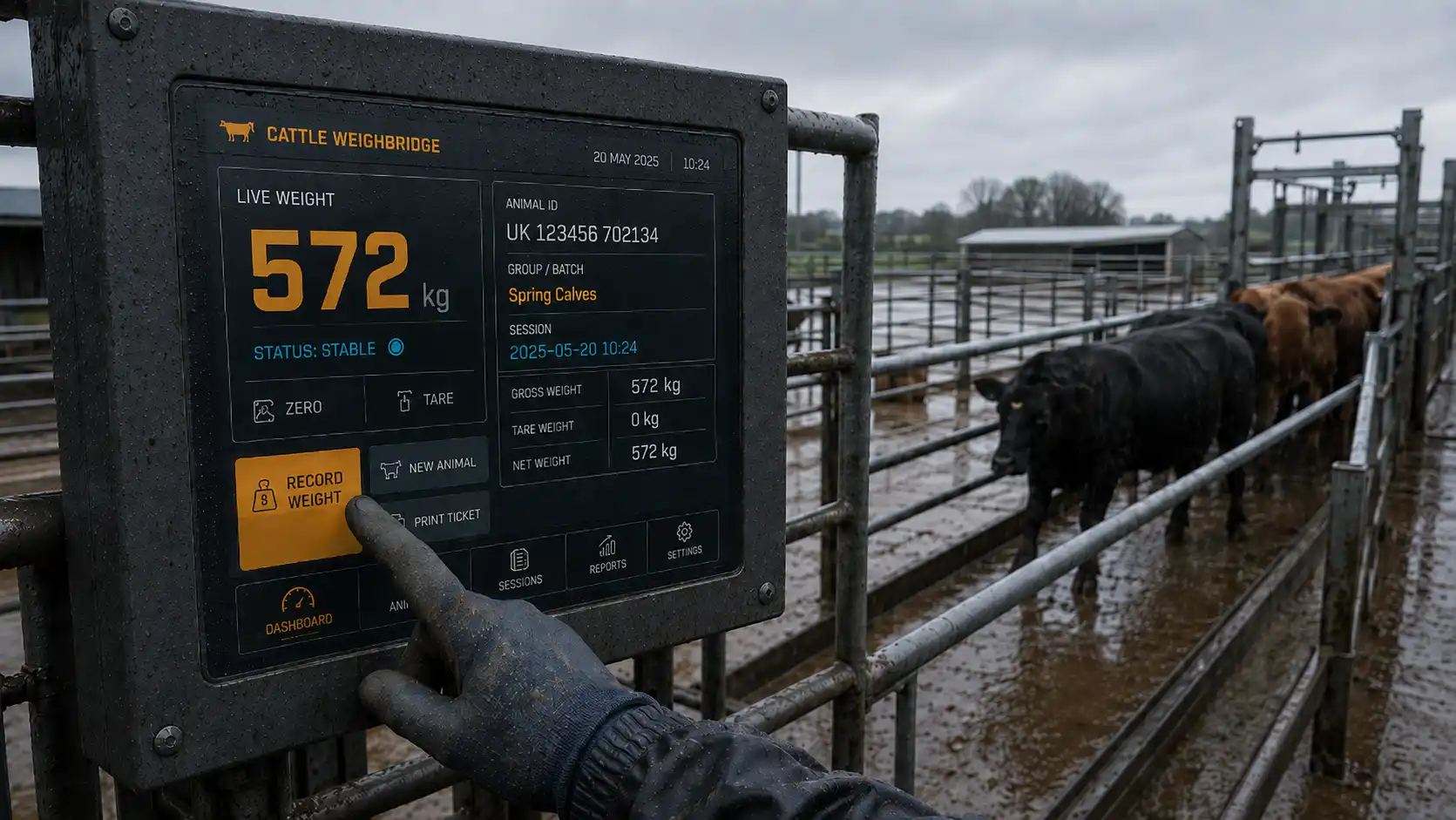
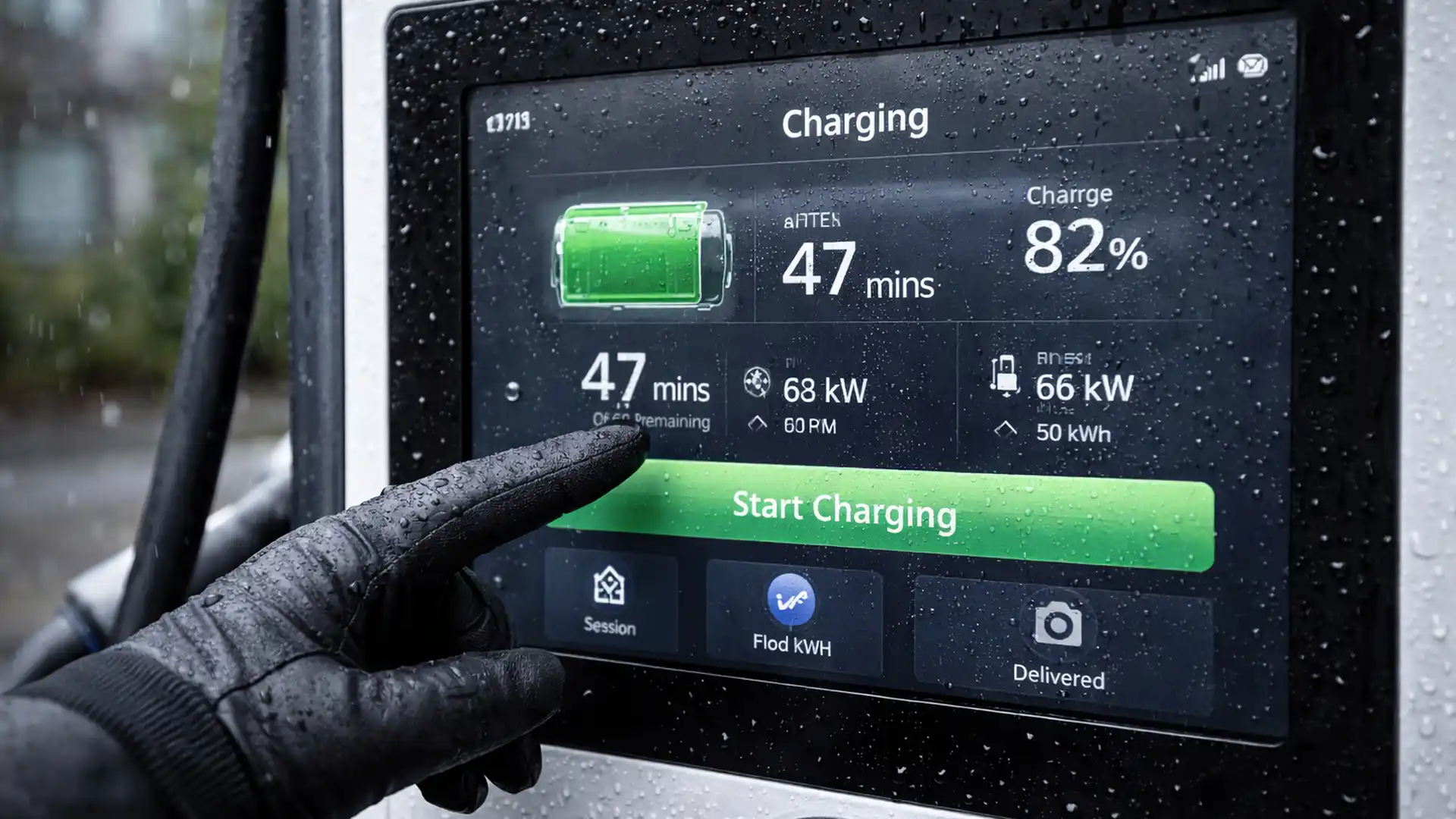
Over the last few months we've written extensively about what it takes to keep a display readable and reliable outdoors - coping with direct sunlight, temperature extremes, moisture, dust and constant vibration. Solving these challenges well is genuinely difficult, and it's an area where Anders has deep engineering expertise. But a display that can withstand demanding outdoor environments is still a long way from becoming a product ready for deployment in the field.
Getting all the way there is a discipline in its own right. It means engineering everything around the display with the same care as the display itself: an enclosure robust enough to protect against the elements, the embedded compute and peripherals that turn a screen into a complete system, and the certification needed to make the finished product legal to sell and install. Bringing these disciplines together - reliably, and to a standard suitable for the harshest environments – is what we do best at Anders.
Four Disciplines of a Deployable Rugged Display System
A rugged outdoor display is not a single component but a complete system, and every part of it has to be engineered deliberately. Four disciplines have to come together and work as one:
- Display engineering - panel selection, sunlight-readable brightness, optical bonding, cover glass, and touch and video integration
- Mechanical and thermal design - sealed enclosures, ingress protection, impact resistance and cooling designed for the environment
- Embedded compute and peripherals - the processing, connectivity and sensors that transform a display into a complete application
- Compliance and certification - EMC, safety and CE testing that make the finished product legal to deploy
Get any one of these wrong and the whole system is compromised, whether that's a high-performance bonded display inside a poorly sealed enclosure, a certified panel that overheats, or a finished product that cannot legally be placed on the market. The real expertise lies in engineering these disciplines together rather than treating them as separate hand-offs, from the initial concept through to the finished product.
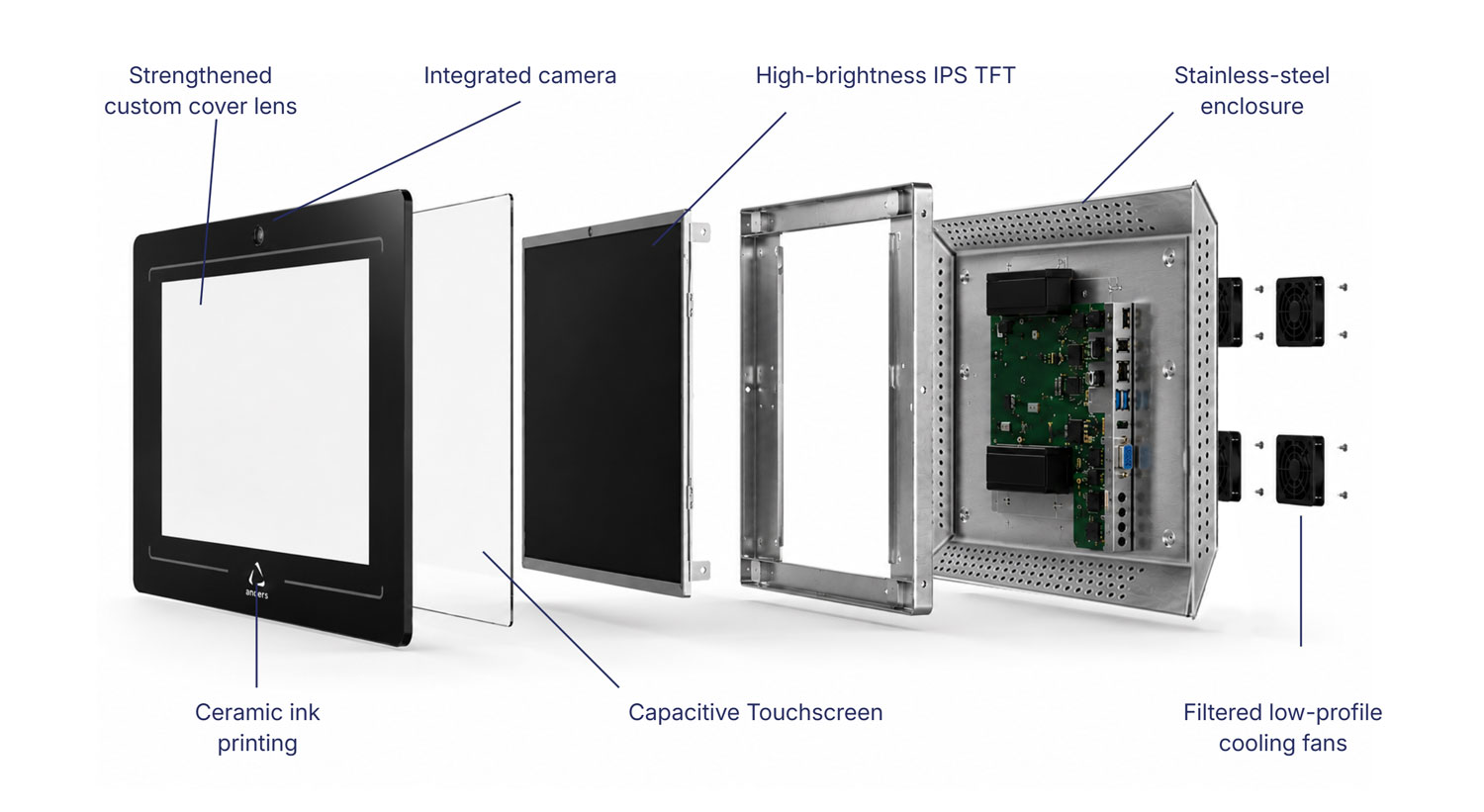
Panel Selection, Brightness and Optical Bonding
Everything begins with the display, so rather than force-fitting an off-the-shelf module, we start with a high-contrast IPS-TFT panel and customise it for the environment in which it has to survive.
Brightness can be increased to as much as 1,500 cd/m² so the screen remains clearly visible in direct sunlight. Optical bonding significantly reduces internal reflections while helping prevent condensation, and a custom cover glass with an etched anti-glare finish fine-tunes optical performance.
Video is typically delivered over HDMI while touch is handled over USB, allowing the finished unit to behave as a single, fully integrated device.
Enclosure Design: IP Rating, IK07 Impact Resistance and Thermal Management
A rugged display ultimately lives or dies by its enclosure. Designing one for demanding outdoor and washdown environments means carefully considering every potential route for water, dust and contaminants to enter, while also ensuring the unit withstands the mechanical stresses it will experience throughout its lifetime.
In practice, this typically includes:
- Thick, strengthened custom cover glass that protects the panel from impacts, achieves IK07 impact resistance and is optically bonded for both durability and clarity
- Printed branding on the front glass using UV-resistant ceramic ink for a clean, durable finish
- A bespoke bezel with fixing points tailored to the customer's mounting requirements
- Thermal management designed for sealed enclosures, for example filtered fans with protective covers, ensuring electronics remain cool without compromising environmental protection
None of this is off the shelf. Every decision is driven by the application and the environment the finished product must operate in.
From Monitor to Self-Contained Device: Embedded Compute Integration
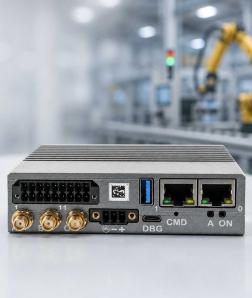
A display truly becomes a system once it can run the application it has been designed for. Integrating a compact embedded computer directly into the enclosure transforms a monitor connected to an external PC into a complete, self-contained device.
From there, adding functionality becomes part of the engineering process rather than integrating multiple third-party components. Cameras for operator identification, sensors, connectivity and other application-specific hardware can all be incorporated cleanly because the compute platform and enclosure are engineered together from the outset.
CE Marking: EMC and Low-Voltage Directive Testing
Hardware that cannot be certified cannot be deployed, and this is precisely where many display projects stall. Delivering a finished system also means delivering the documentation that accompanies it – a CE Certificate of Conformity, not simply a working product but the evidence required to place it legally on the market. Depending on the application, this typically includes:
- EMC testing against the EMC Directive 2014/30/EU, supported by formal test reports and referenced on the Certificate of Conformity
- Low-voltage safety testing against the LVD Directive 2014/35/EU
Treating certification as an integral part of the engineering process, rather than an afterthought, eliminates the need for customers to manage a separate compliance programme or discover costly issues after a design has been finalised. The result is a system that arrives ready for CE marking and ready for deployment.
Case Study: Engineering a Rugged Industrial Outdoor HMI Solution
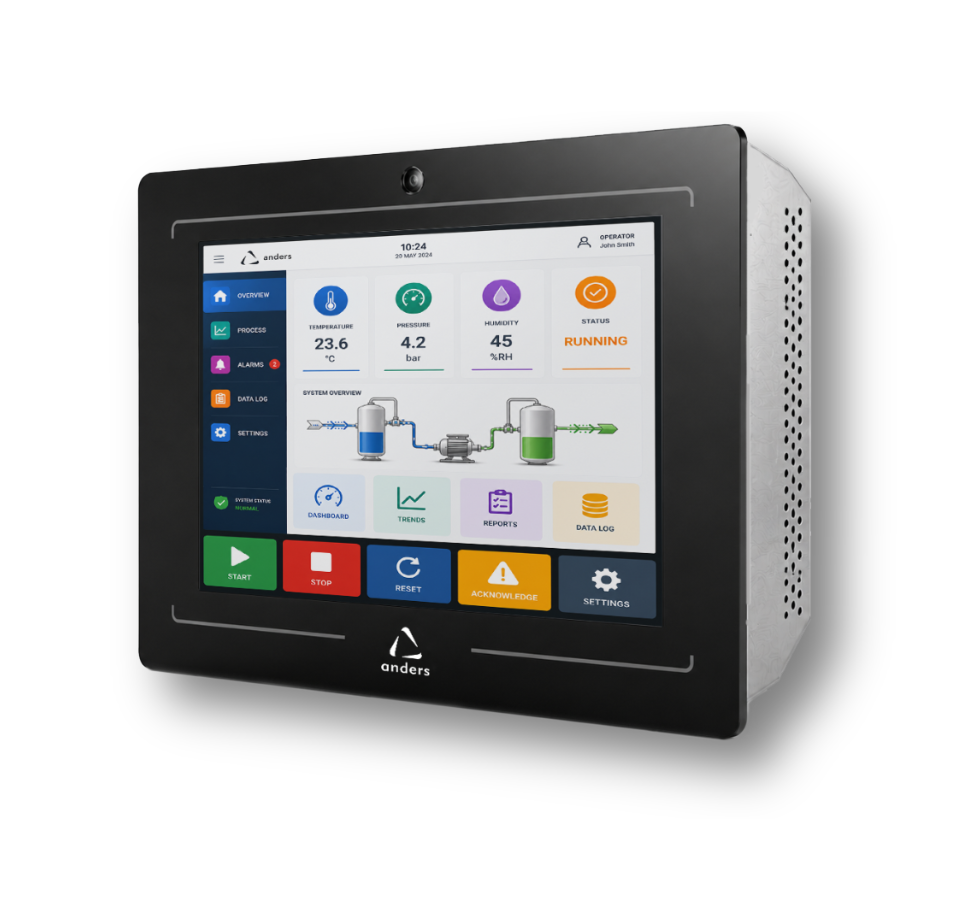
Every rugged embedded display project presents its own engineering challenges. One recent customer project involved developing a complete industrial outdoor HMI solution for use in a demanding environment, where sunlight readability, environmental protection, embedded computing and regulatory compliance were all critical to the success of the final product.
The project demonstrates how integrating display engineering, enclosure design, embedded computing and certification from the outset can simplify development and deliver a fully engineered solution that's ready for deployment.
View the full case study
Your Engineering Partner from Concept to Certified Product
An outdoor-readable display is only the starting point. A truly rugged embedded display is a complete engineered system, bringing together the display, enclosure, embedded compute, peripherals and certification into a single integrated solution.
That end-to-end engineering is exactly what we do at Anders. We take rugged outdoor display projects from initial concept through to certified, field-ready products, providing our customers with a single engineering partner throughout the entire development journey.
If you're developing an outdoor or rugged embedded display application, we'd be pleased to discuss your requirements and help identify the most appropriate solution.
Contact us if you want to know more