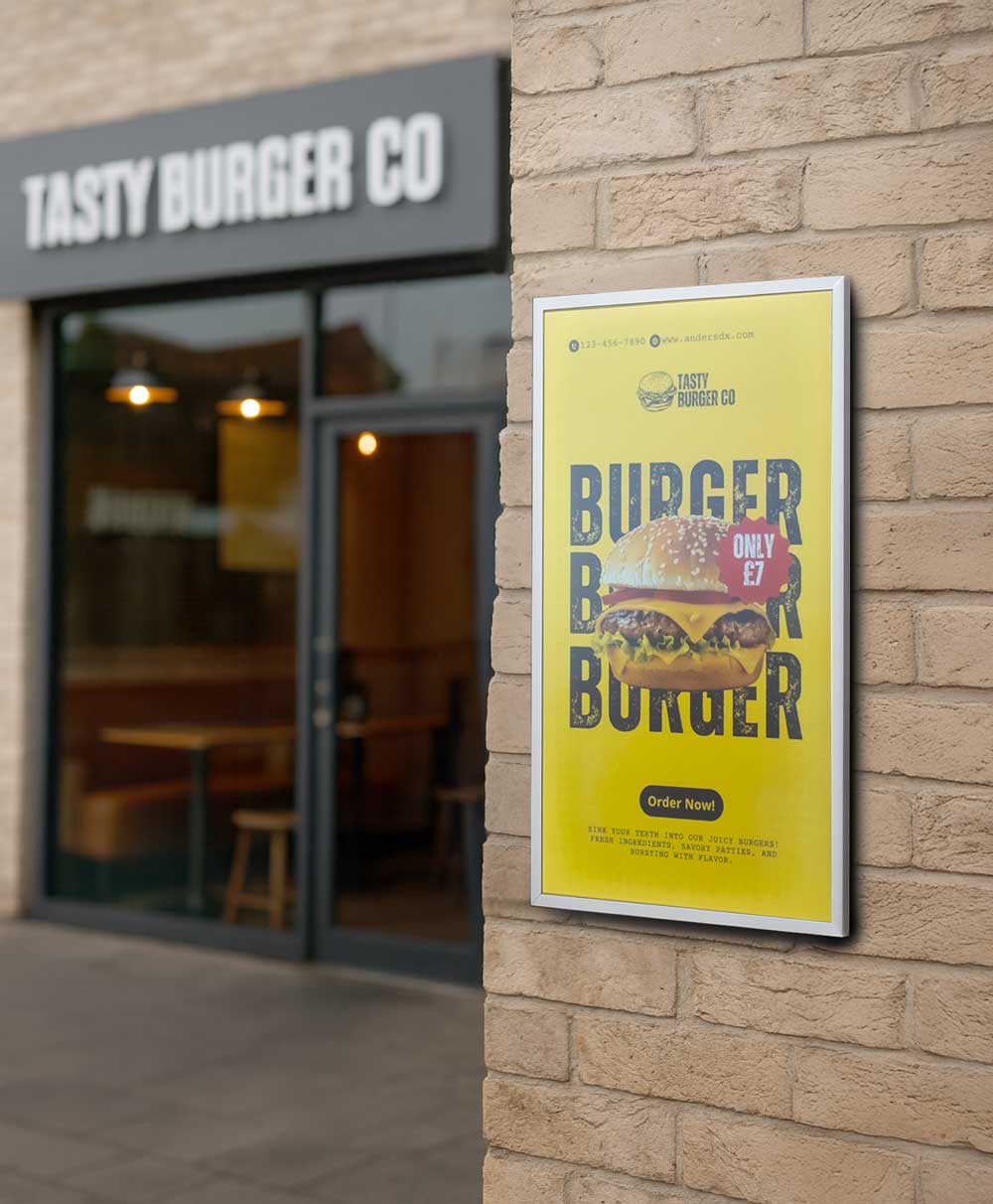
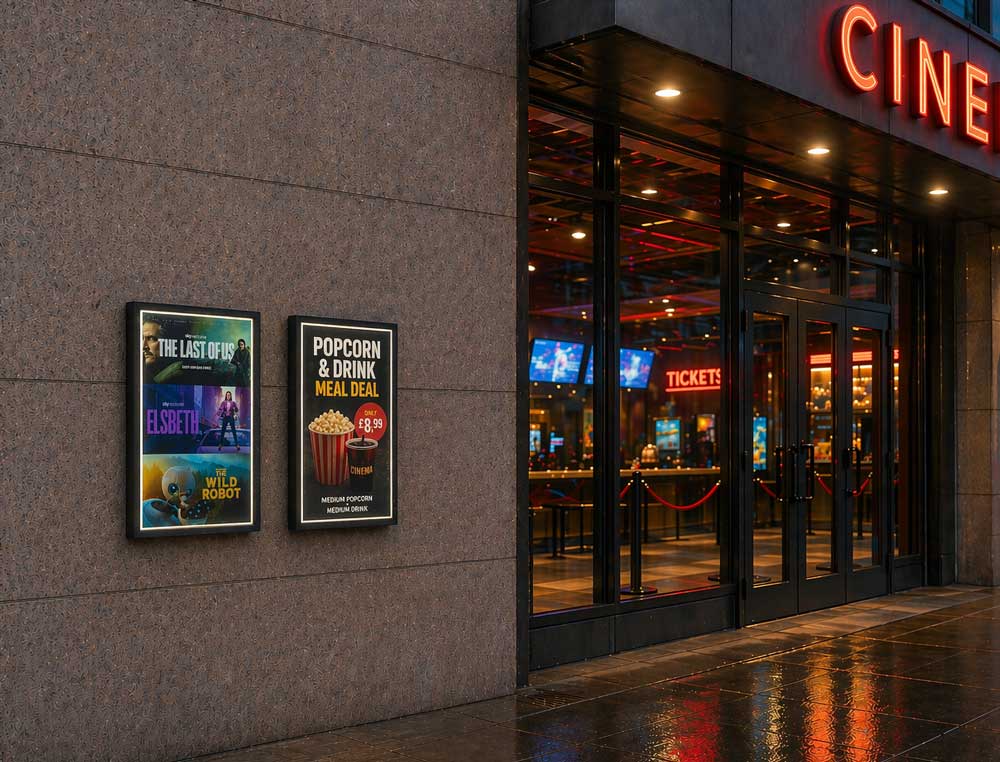
Cholesteric LCD (CH-LCD) and Electrophoretic (EPD) displays are always on, always visible and at their best in direct sunlight. Without the need for a backlight. Once an image is written to the screen, it stays sharp, bright and highly visible for weeks or even months. And here's the key: energy is consumed only at the moment of update. Between updates - whether that's hours, days or weeks - the display requires zero power input.
Because sometimes the most effective solution is one that does almost nothing - and does it brilliantly.
The Power Problem with Conventional Displays
Outdoor signage is often in locations where power is limited, expensive to run, or simply not available. Sigtal signage such as solar-powered bus stops, remote monitoring stations, forecourt advertising, retail shelf labels - these are environments where running a backlit TFT display around the clock is either impractical or completely out of the question. This makes energy efficiency and long-term cost efficiency critical design factors.
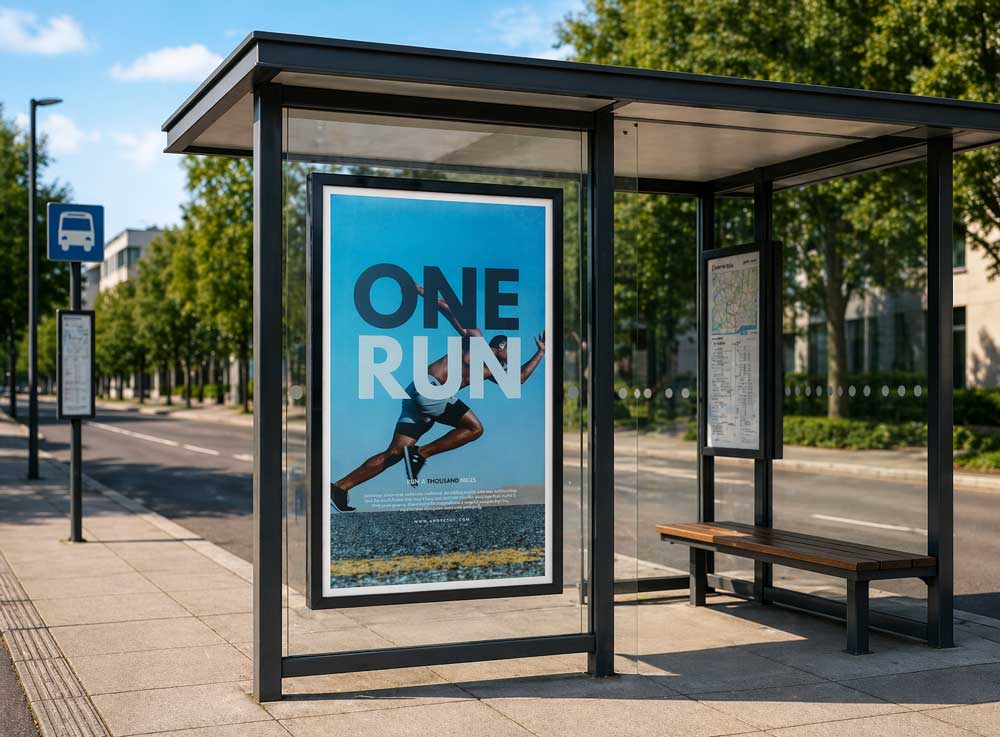
Reflective bistable displays reverse the typical approach used by most display technology. Instead of generating light, they use ambient light - which means readability actually improves
in bright sunlight. And because the display is bistable (image held without power), the only energy consumed is during the brief moment of each update. This dramatically reduces energy consumption and enables significantly lower running costs compared to always-on backlit LCD or TFT displays.
The less often you need to update, the more compelling the technology becomes.
What These Displays Are - And Are NOT For
Candidly, CH-LCD and EPD are not the right choice for video, animation or fast-moving data. Refresh times range from a fraction of a second for CH-LCD to up to 22 seconds for some EPD variants. However, that limitation is a feature, not a flaw - and is what enables their exceptional energy efficiency, making them one of the most cost-efficient digital signage options for slow moving or static content.
These technologies excel where content is:
- Static for long periods - wayfinding, safety notices, room signage, digital posters
- Updated on a schedule - daily timetables, weekly pricing, seasonal campaigns
- Triggered by events - asset tracking, access control or status change
If your display needs to update every few seconds, it’s recommended to use a TFT of VA display. However, if updates are daily – or weekly – then an energy efficient zero-power display may be the most effective choice. Continue through the article to find out more.
Cholesteric LCD - Full Colour, Zero Standby Power
CH-LCD is one of the most versatile reflective display technologies available, capable of delivering up to 16.7 million colours through its reflective liquid crystal structure. Because it requires no backlight or colour filters, the design remains inherently low power, while still achieving refresh times of around 200 milliseconds - exceptionally fast for a bistable display.
It also operates across a wide temperature range (-30°C to +80°C), making it one of the few outdoor-rated reflective colour
display options available.
A built-in solar panel option takes the low-power story even further. Once fully charged, and on sunny days with 30,000 lux illumination, the display can support up to 18 hours of daily operation and up to 720 refreshes per day - making it well suited to self-contained outdoor deployments with no external power infrastructure required.
Best for: Colour outdoor signage that needs periodic updates - wayfinding displays, information boards, retail signage refreshed daily or weekly.
E-Ink ePaper - The Ultra-Low Power Standard
EInk’s EPD has become the benchmark for low-power display applications, and for good reason. Its bistable architecture delivers industry-leading energy efficiency, which translates directly into reduced battery requirements, lower maintenance cycles, and improved long-term cost efficiency in deployed display systems. In standby, it draws microamps, the image is retained with zero power.
When an update is needed, it completes in anywhere from 1 to 22 seconds depending on the variant - and then power consumption drops back to nothing.
The main variants available today are:
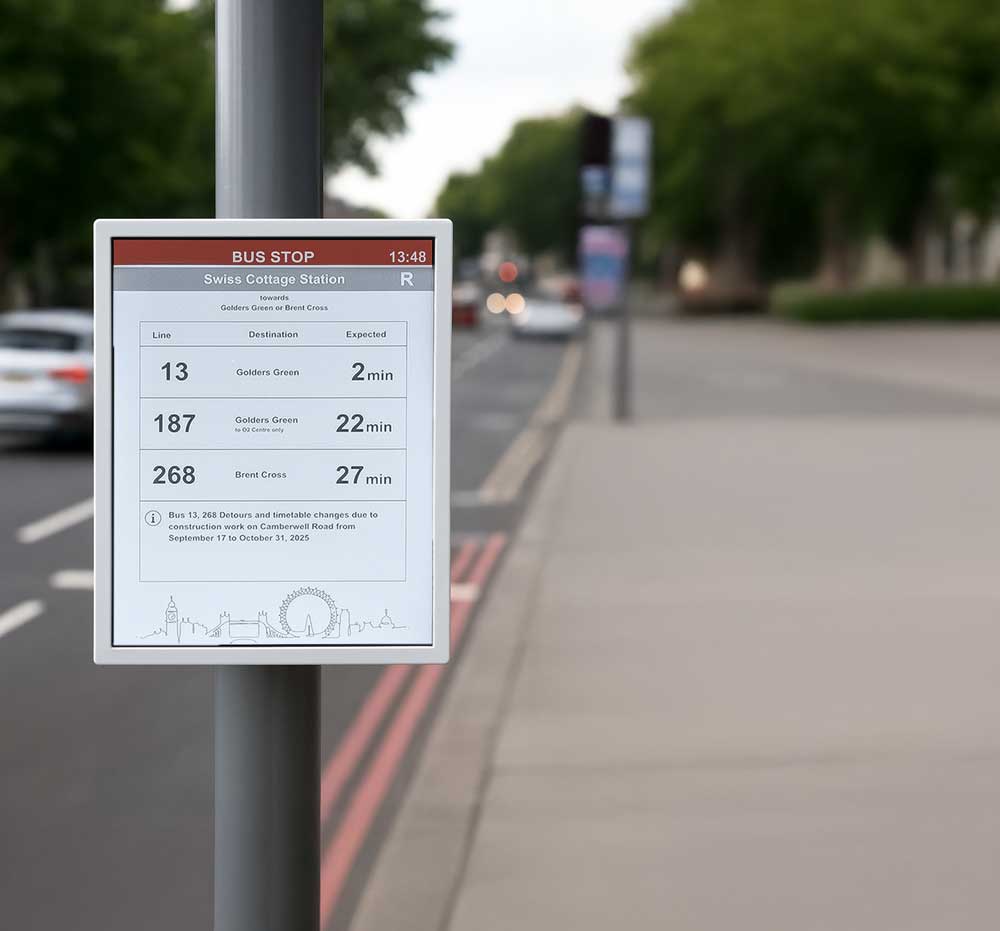
Black & White - Fast (1–2s refresh), high contrast, extremely mature technology. The go-to choice for text-heavy static applications like timetables, directories and compliance labels.
Tri-Colour - Adds red or yellow to the palette. Refresh takes around 22 seconds, so this suits signage that updates rarely - think daily schedule changes or seasonal promotions.
Spectra 6 - Up to 60,000 colours from six pigments with no colour filter array, delivering print-quality visuals at up to 200 PPI and a 22:1 contrast ratio. With a 15-second refresh its ideal for visually rich but infrequently updated displays.
Kaleido - Around 4,000 colours with faster monochrome refresh. A practical middle ground for applications that need some colour and a quick refresh rate (approx. 1-2 seconds). It also boasts a wide operating temperature for outdoors of -15° to +65°C.
How to choose the best display?
The decision for which display technology is best for you typically comes down to three key things: update frequency, colour requirements, and operating temperature range.
|
|
CH-LCD
|
EPD B/W
|
EPD Tri-Colour
|
EPD Spectra 6
|
EPD Kaleido
|
|
Colours
|
16.7M
|
2
|
3
|
60,000
|
4,096
|
|
Refresh Rate
|
~200ms
|
1-2s
|
~22s
|
~15s
|
1-2s
|
|
Static Power
|
0W
|
0W
|
0W
|
0W
|
0W
|
|
Operating Temperature
|
-30° to +80°C
|
0° to +50°C
|
0° to +50°C
|
0° to +50°C
|
-15° to +65°C
|
For uses with infrequent updates where monochrome is sufficient, B/W EPD is one of the best cost-efficient display technologies available.
Where colour is required in demanding outdoor environments, CH-LCD provides a compelling balance of durability, visibility and energy-efficient performance, making it a strong candidate for applications that need visual impact without the power burden of backlit displays.
View products
What about after dark?
Reflective displays are at their best in bright ambient light - but outdoor signage doesn't stop being useful when the sun goes down. Both CH-LCD and EPD are available with integrated front lighting, activating a low-power LED layer only when needed. Managed via ambient light sensors or timers, illumination is used sparingly, keeping overall energy consumption tightly controlled.
For solar power installations, this approach ensures the total energy budget remains well within the limits of a modest panel and battery, without compromising on the low-power narrative. This means consistent, round-the-clock readability whilst keeping the main advantage.
There's More to It Than the Panel
Choosing the right display is just the start. Outdoor deployments bring their own engineering challenges - solar loading inside enclosures, condensation behind cover glass, communication infrastructure for remote updates, and power systems designed around infrequent but reliable refresh cycles.
At Anders, we're your display solution specialist through every step. From panel selection and optical bonding to firmware, communications and enclosure design - we support the complete system, not just the screen.
If you're designing a display that spends most of its life showing the same image, let's talk about whether CH-LCD or EPD is the right foundation for your product.
This is the second in our series on outdoor display technologies. Read part one here:
Designing sunlight readable displays for dynamic applications
Partner With Anders – Complete Integration
At Anders, we engineer complete sunlight-readable solutions - combining optical technologies, thermal management, hardware electronics, mechanical integration and firmware optimisation to deliver a solution tailored to the precise demands of your application.
Selecting the panel is only the beginning. Outdoor systems demand coordinated design across electronics, software and mechanics. We support the entire embedded architecture around the display - not just the panel itself.
Our expertise includes:
- Technology selection and optimisation
- Optical bonding, films, filters and cover lens design
- PCAP and alternative touch integration
- Driver porting and firmware development
- MPU/MCU platform design
- Power optimisation and thermal modelling
- Mechanical integration and environmental sealing
- Design for manufacture and compliance
Whether integrating into an existing platform or developing a complete embedded system from the ground up, we ensure your outdoor product performs reliably - from concept through to production.
Contact us to discuss your next outdoor project.